
Certain AI agent platforms give a bank or credit union the tools to build its own agents, while purpose-built compliance agents such as Ask Kaia ship with a regulatory knowledge base, cited outputs and review records.
This comparison covers scope, comparison fields, a side-by-side matrix, supervisory guidance and a scorecard.

Which AI Agent Platforms and Compliance Uses Are in Scope
Two kinds of product compete for compliance work:
- Horizontal platforms, often sold as an enterprise AI agent platform, supply models, connectors, orchestration and logging, and leave the subject matter to the customer.
- Vertical AI agents are built for one industry’s tasks and ship with the content those tasks need.
Five horizontal platforms are compared with one set of vertical compliance agents, as part of Ask Kaia. The compliance uses in scope are regulatory questions, policy drafting and review, marketing review, and HMDA and fair lending testing at US banks and credit unions.
Excluded are Microsoft 365 Copilot as an office assistant, compared in Ask Kaia vs Copilot, GRC software as the system of record for regulatory change, and pricing.
Fields Used to Compare AI Agents for Compliance
These fields determine how much compliance work an agent platform leaves with the institution.
Where regulatory content comes from
Either the vendor ships and maintains a regulatory knowledge base, or the institution loads and maintains the regulations itself.
Citation to source
A cited answer lets a reviewer check the passage the agent relied on before acting.
Human review and audit logging
The record of who ran an agent, on what input, and who approved the output is what an internal auditor or examiner reads, and it needs a durable home, the question behind AI agent platforms vs GRC software.
Financial-services features
Prebuilt banking agents or templates narrow the build.
What the institution still builds, validates and governs
The length of that list is the practical cost of the choice.
AI Agent Platforms Compared for Compliance Work
The products range from developer infrastructure to finished compliance agents, as each vendor documented them as of publishing in October 2026.
Amazon Bedrock AgentCore
Amazon Bedrock AgentCore is the AWS platform for developers to build, connect and run agents at scale. It is model-agnostic, works with open-source frameworks such as LangGraph and CrewAI, and provides managed runtime, memory, gateway, identity, observability, policy and evaluation services.
Regulatory content is whatever developers connect, for example an Amazon Bedrock knowledge base, whose RetrieveAndGenerate responses cite the source chunks used.
AgentCore Policy intercepts every tool call at the gateway and can require a recorded human approval before a consequential action, while AWS CloudTrail keeps the audit trail.
Good to Note
No banking regulatory content ships with it. Everything else falls to the institution: the agent, the regulatory corpus, the citation display, the review workflow and the documentation an examiner reads.
Ask Kaia
Ask Kaia provides specialized AI agents for U.S. financial organizations; compliance staff choose a task, supply context and review the analysis, drafts or findings. The agents draw on a shared U.S. federal and state regulatory knowledge base updated weekly, and outputs carry citations a reviewer can inspect and export to Word or Excel.
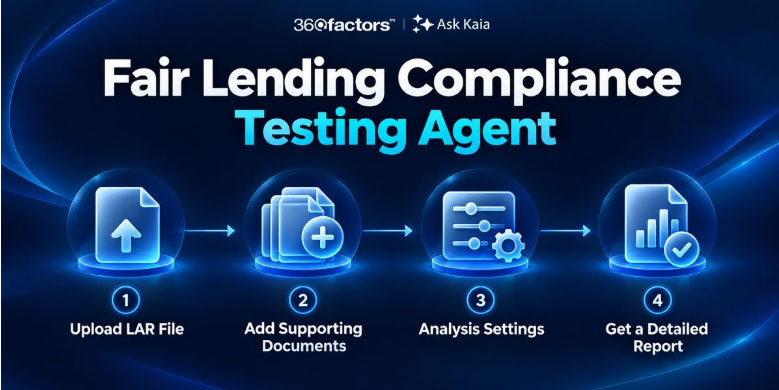
People retain decisions and approvals, and access is managed by user. Banking agents include the Ask Kaia Regulatory Intelligence Agent, Ask Kaia Marketing Ad Review Agent, Ask Kaia HMDA Compliance Testing Agent and Ask Kaia Fair Lending Compliance Testing Agent, run on their own or within Predict360.
Good to Note
Review, approvals, vendor due diligence and AI policy stay with the institution, and other tasks need another tool.
Google Gemini Enterprise
Gemini Enterprise is the Google Cloud agent platform for employees and the product that absorbed Google Agentspace. Organizations connect Google and third-party data sources into data stores, build custom agents with Workflow Builder and draw on prebuilt agents in the Agent Gallery. Answers are grounded in the connected enterprise data with citations, with public web grounding optional.
Good to Note
The concepts documentation lists no banking-specific agent, and regulatory content arrives only through data stores the institution connects.
IBM watsonx Orchestrate
IBM describes watsonx Orchestrate as an agent management platform to build and manage AI agents in one control plane, with custom tool creation and a catalog of ready-to-use agents from IBM and partners. Its knowledge agents answer from the documents, SharePoint and OneDrive libraries, websites and internal repositories they are pointed at, and every response traces to its source.
Teams can trace activity, evaluate performance, intervene, and apply access, policy and guardrail controls across agents, tools and workflows.
Good to Note
The catalog’s named domains (sales, HR, procurement, IT and customer care) do not include financial services. Supplying the regulatory corpus, placing review steps and documenting each agent for model risk and third-party review remain institution work.
Microsoft Copilot Studio
Copilot Studio is the Microsoft tool for makers to build agents on knowledge they add: public websites, uploaded documents, SharePoint, Dataverse and enterprise data through connectors. With ungrounded responses turned off, an agent answers only when the answer includes an in-text citation to a knowledge source.
A request information action pauses an agent flow until a designated reviewer responds through Outlook. Microsoft Purview records administrator and maker activity by default and logs user interactions, though the Audit solution keeps the transcript thread ID, not the full conversation.
Good to Note
No banking regulatory knowledge ships with the product, so the institution loads and updates the regulations, designs the review flow and assembles evidence across Copilot Studio and Purview.
Salesforce Agentforce
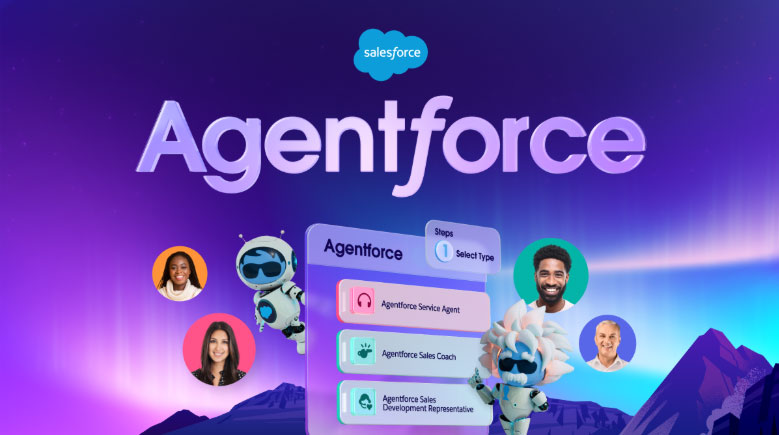
Agentforce for Financial Services adds templates to the Salesforce agent platform for everyday banking requests, complaint management and compliance management, which Salesforce describes as guiding teams through policy-aware workflows and regulatory processes. Agents are grounded in the firm’s own data through Data 360, and citations cover knowledge articles, PDF files and web pages, with Apex code needed for citations in custom actions.
The Agentforce Trust Layer, Salesforce says, provides zero data retention by external AI models and an immutable audit trail for every agent action, with handoff to a human when needed.
Good to Note
Salesforce notes that the pre-built capabilities it shows may not all be currently available. The institution supplies regulatory content and policies, confirms which templates are live and configures review.
AI Agent Platforms Side by Side
Across the first five fields, the seven AI agent platforms compare as follows.
| Platform | Regulatory content | Human review and audit | Financial-services features |
|---|---|---|---|
| Amazon Bedrock AgentCore | Institution connects | Policy can require recorded approval; CloudTrail | None banking-specific |
| Ask Kaia | Federal and state knowledge base, updated weekly | People approve; execution history | Regulatory, marketing, HMDA and fair lending agents |
| Google Gemini Enterprise | Institution connects | Usage audit logs; review designed by institution | None listed |
| IBM watsonx Orchestrate | Institution connects | Activity tracing; guardrails | None listed |
| Microsoft Copilot Studio | Maker adds sources | Request information action; Purview audit | None banking-specific |
| Salesforce Agentforce | Firm’s data through Data 360 | Human handoff; Trust Layer audit trail | Banking, complaint and compliance templates |
What Supervisory Guidance Expects from Agent Platforms
No federal banking rule is written specifically for AI agents, so existing model risk and third-party guidance frames AI agent governance.
On 17 April 2026 the Federal Reserve, OCC and FDIC issued revised model risk management guidance (SR 26-2, OCC Bulletin 2026-13), superseding SR 11-7. A footnote places generative and agentic AI models outside its scope as “novel and rapidly evolving”, leaving them to each institution’s own risk management and governance. For models still in scope, it treats validation of vendor products, by internal or outside parties, as sound practice, and it sets no enforceable standards.
Each vendor here is a third party under the 2023 Interagency Guidance on Third-Party Relationships, which states that using third parties does not diminish a banking organization’s responsibilities and that third parties using new technologies may present elevated risks.
Credit unions follow NCUA Supervisory Letter 07-01. On 11 September 2026 the OCC, Federal Reserve, FDIC and NCUA proposed replacement guidance; comments close 16 November 2026, and the 2023 guidance applies until a final version issues.
A list of AI agent audit requirements turns these expectations into the records an examiner asks to see.
Scorecard for Evaluating Any AI Agent Platform
The scorecard rates any AI agent platform on three levels: built in (the product does it as shipped), configurable (the product supplies the feature and the institution sets it up), or institution builds.
| Criterion | Evidence to request from the vendor | Rated “built in” when |
|---|---|---|
| Regulatory grounding | Regulations covered, who maintains them and how they are updated | The vendor maintains a regulatory knowledge base |
| Citation to source | A sample output showing the cited passage and source link | Every answer carries a checkable citation |
| Human review before a record is created | Where a named person approves output before it reaches a policy, filing or customer | Approval is a required step |
| Audit trail | A log of who ran the agent, inputs, output and approver, with retention terms | The log is recorded automatically |
| Examiner-ready output | An export readable without platform access | Reports export to standard formats |
| Build and maintenance effort | Roles and tasks to launch the use and keep content current | Compliance staff can run it without developers |
| Third-party and model risk documentation | SOC reports, model documentation, change notices, validation evidence | The vendor supplies them on request |
Weights belong in the institution’s procurement or model risk policy, since the guidance assigns none. Each “institution builds” rating becomes a compliance team task, and a wider checklist for evaluating an AI compliance solution covers the rest of the vendor review.
Frequently Asked Questions
Can banks use AI agents for compliance?
Banks and credit unions can use AI agents for compliance work, and no federal banking rule prohibits it. Revised model risk guidance from April 2026 leaves generative and agentic AI to each institution’s own risk management and governance. The 2023 interagency third-party guidance applies to the vendor, and the institution remains responsible for the activity the agent performs.
Should a bank build or buy AI agents for compliance?
It depends on who will source and maintain the regulatory content, the citations and the review records. Building on a horizontal platform suits a team with developers and a named owner for the regulatory corpus; a purpose-built agent suits the tasks it already covers. Scoring both options on the seven scorecard criteria shows which work stays with the institution.
How do AI agents cite regulations?
An AI agent cites a regulation by retrieving passages from a knowledge source and attaching a reference to the passage it used. Microsoft Copilot Studio, for example, can withhold an answer that lacks an in-text citation. A citation is only as current as the regulatory source behind it, which makes the owner and update schedule of that source part of the evaluation.
Learn how Ask Kaia can assist your organization’s compliance team in gaining clarity on regulatory changes.
Request Demo- Policy Drafting
- Compliance Automation
- Audit Trails
- Regulatory Intelligence
- 1Which AI Agent Platforms and Compliance Uses Are in Scope
- 2Fields Used to Compare AI Agents for Compliance
- 3AI Agent Platforms Compared for Compliance Work
- 4AI Agent Platforms Side by Side
- 5What Supervisory Guidance Expects from Agent Platforms
- 6Scorecard for Evaluating Any AI Agent Platform
- 7Frequently Asked Questions