Home/ Blog / Enhancing ERM Through the Effective Use of KRI Risk Management
According to AuditBoard, only 37% of risk leaders are confident their assessments capture all key risk drivers. This points to inefficient frameworks being used to measure risk within organizations.
Enterprise risk management (ERM) can help businesses overcome these challenges. This framework is comprised of different stages, including identification, evaluation, and reduction of risks. An essential component of ERM is the creation of metrics known as “key risk indicators” or KRIs.
KRIs are carefully established metrics that evaluate an organization’s most compelling risks. KRI risk management, backed by risk appetite statements and the organization’s risk management strategy, acts as an early warning of potential risks in different areas of the enterprise.
The Role of KRIs in Enterprise Risk Management
KRIs, backed by the organization’s risk appetite statements and overarching risk management strategy, serve as an early warning system. Businesses can integrate incredible risk analysis software in their ERM framework for compelling insights.
KRIs are instrumental in several ways:
Monitoring Controls and Exposures
KRI risk management offers insights into the effectiveness of controls, risks, and potential exposures. They serve as tools that highlight areas of concern, allowing businesses to take corrective actions promptly.
Overseeing Risk Appetite
All financial institutions have a risk threshold, the decided value beyond which risk becomes unacceptable. KRIs assist in monitoring the risk appetite, as they are primarily used in conjunction with the thresholds to ensure that the company works within its risk tolerance.
Operational Monitoring
Contrary to widespread belief, KRI risk management is best monitored closer to the operational level rather than just at the higher levels of management.
Constructing Senior Management Reporting
One of the challenges with KRIs is aggregating specific business or process measures for senior management. KRI risk assessment tools can provide a holistic view of the organization’s risk profile, enabling informed decision-making.
Types of Key Risk Indicators
An effective KRI risk management approach gives businesses the metrics to monitor potential risks that might impact an organization. KRIs can be categorized based on different aspects of a business:
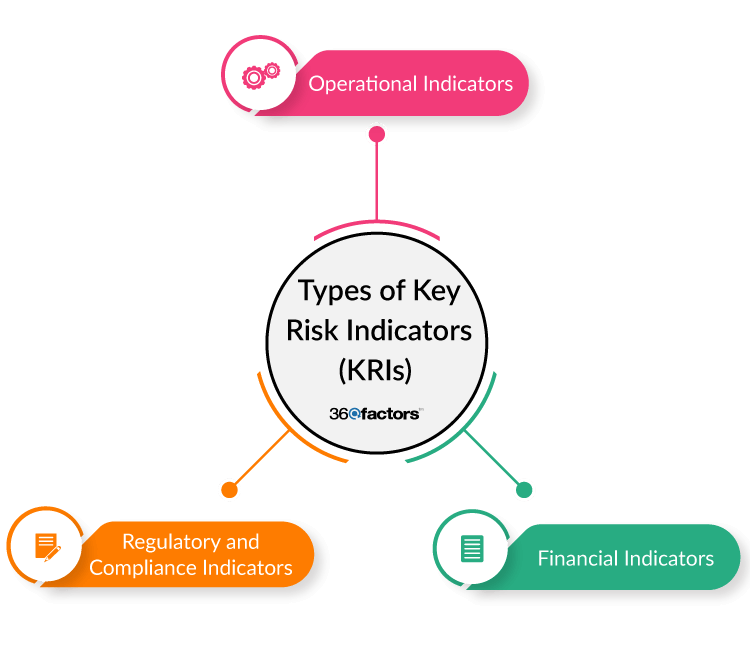
Operational Indicators:
These KRIs identify risks arising from the day-to-day activities of an organization.
Examples:
- Percentage of Delayed Projects in Progress: Measures the organization’s management and planning effectiveness.
- Number of System Capacity Overloads: Indicates the number of times systems exceed their established maximum capacity.
Financial Indicators:
These KRIs assess financial risks related to market dynamics, competition, and regulatory changes allowing businesses to create a robust KRI risk management framework.
Examples:
- Paid Invoices: Indicates cash flow risks related to timely customer payments.
- Outstanding Payables: Measures the organization’s efficiency in settling its dues.
- Value at Risk: Represents the potential loss in value of a risky asset or portfolio over a defined period.
Regulatory and Compliance Indicators:
These KRIs monitor an organization’s adherence to laws, regulations, guidelines, and specifications relevant to its business.
Examples:
- Number of Regulatory Violations: Indicates the number of times the organization failed to meet regulatory standards.
- Compliance Training Completion Rate: This KRI improves the overall KRI risk management process by measuring the percentage of employees who have completed mandatory compliance training.
The Best Way to Develop Your Key Risk Indicators
KRIs are essential metrics that help organizations identify, assess, and mitigate potential risks that impact their objectives. Developing effective KRIs is crucial for a robust risk management strategy. Here’s a guide on the best ways to establish your KRIs:
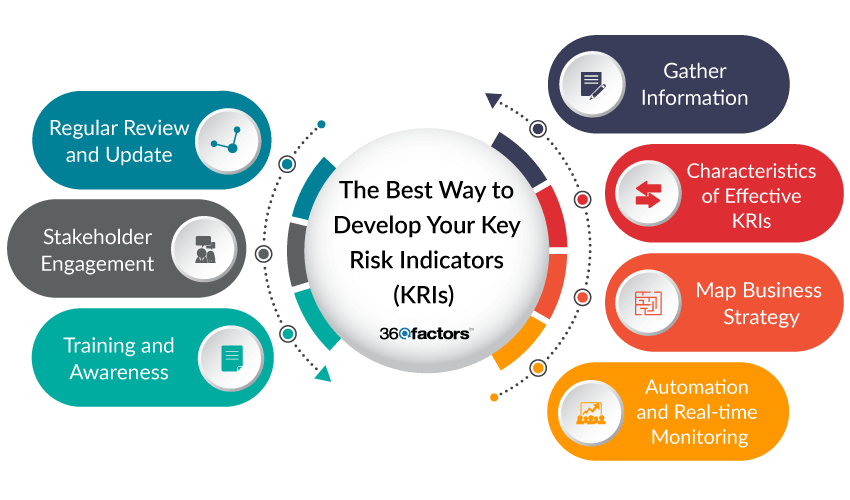
Understand Your Needs
An effective KRI is tailored to the specific needs of the company. It’s essential to clearly understand the organization’s objectives, processes, and potential risks for successful KRI risk management.
Gather Information
The more information available for risk assessment, the more precise the organization’s risk landscape becomes.
To set up KRIs, engage with different departments, conduct surveys, employ an effective risk assessment tool, and gather data to understand potential risks better.
Characteristics of Effective KRIs
KRIs should be:
- Quantifiable: They should be measurable in numbers or percentages.
- Reliable: The data should be reliable and consistent.
- Verifiable: There should be a way to verify the accuracy of the KRI.
- Predictable: They should provide foresight into potential risks.
- Relevant: They should be directly related to the associated risk.
We recommend putting together KRIs that are specific and use actual data, like this:
| Characteristic | Good KRI Example | Poor KRI Example |
|---|---|---|
| Quantifiable | “% of projects delayed >30 days” | “Project health” |
| Predictive | “Vendor response time trending” | “Vendor incidents occurred” |
| Actionable | “IT capacity at 80%” | “General system issues” |
Leveraging KRIs with Predict360 Risk Insights
Key Risk Indicators (KRIs) guide organizations through potential pitfalls and ensure they remain on the path to success. However, the real challenge lies in continuously monitoring, analyzing, and acting upon these indicators to mitigate risks effectively.
Predict360 Risk Insights is a cutting-edge platform designed to elevate your KRI management to the next level. Here’s how it can transform your approach to KRI risk management:
- Real-time Monitoring: Predict360 offers real-time monitoring of KRIs, ensuring you’re always ahead in identifying potential risks.
- Advanced Analytics: With its powerful analytics engine, Predict360 allows deeper analysis of your KRIs, helping you understand the underlying patterns and trends.
- Integration Capabilities: Predict360 integrates with various data sources, ensuring your KRIs are always backed by up-to-date information.
- Customizable Dashboards: Tailor KRI dashboards according to your needs, whether you want a high-level overview or a deep dive into specific indicators.
By implementing a structured KRI framework aligned with your organization’s risk appetite and strategic objectives, you gain the visibility and agility needed to navigate an increasingly complex risk landscape.
The real competitive advantage in 2025 belongs not to those who manage risk, but to those who see risk coming. Start building your KRI framework today, and position your organization to thrive in uncertainty.

Request a Demo
Complete the form below and our business team will be in touch to schedule a product demo.
By clicking ‘SUBMIT’ you agree to our Privacy Policy.
Stay Informed About Upcoming Webinars & Events!