Home/ Blog / Risk Management Challenges and Opportunities: How to Future-Proof
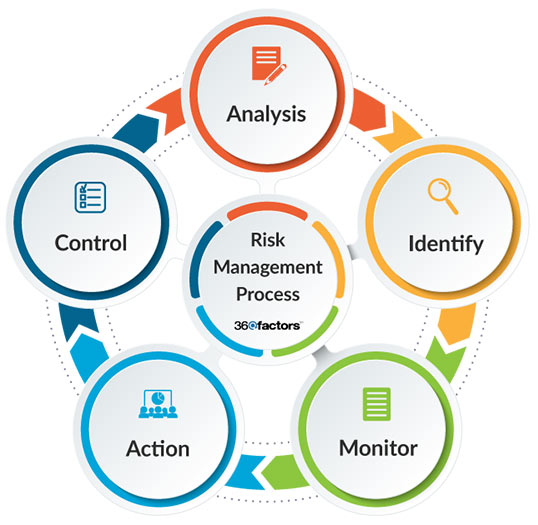
The risk management process evolves depending on the business environment and must therefore be adjusted to adapt quickly when significant changes occur. For example, a change in the national economy can compel government leaders and regulatory bodies to update rules and regulations, causing organizations to reassess their risk management.

Organizations that view risk frameworks as competitive advantages rather than compliance obligations are positioning themselves to thrive amid disruption, while those clinging to traditional quarterly review cycles find themselves structurally incapable of addressing high-velocity, interconnected threats.
New Risk Management Challenges in 2026
This analysis examines the critical risk management challenges and opportunities reshaping financial services in 2026, exploring how forward-thinking institutions are transforming these pressures into strategic capabilities.
Geopolitical Volatility and Macroeconomic Instability
Geopolitical and macroeconomic volatility has solidified its position as the most pressing systemic risk facing financial institutions, acting as a cross-cutting amplifier that exacerbates vulnerabilities across all other risk categories.
Financial institutions now operate within an environment where political transitions in major economies create regulatory unpredictability, jurisdictions pursue divergent policy paths, and sanctions regimes become increasingly complex.
Escalating geopolitical tensions amplify supply chain risks by restricting access to critical resources like energy, raw materials, or semiconductors to exert geopolitical pressure. These disruptions trigger sudden supply shocks and feed uncertainty into financial markets.
Forward-thinking organizations develop scenario plans for plausible shocks and build supply chain alternatives that reduce single-country dependencies for critical inputs. KPMG recommends that enterprises “treat geopolitical risk as an asset as well as a threat” through integrated strategic risk planning.
Artificial Intelligence Governance and Emerging Technology Risks
Gartner research reveals that 90% of finance functions will deploy at least one AI-enabled technology solution by 2026, while more than 80% of enterprises will have used generative AI APIs or deployed GenAI-enabled applications in production environments.
This dramatic acceleration represents not merely technological adoption but a fundamental transformation in how financial services operate, creating novel attack vectors and compliance complexities that traditional risk frameworks inadequately address.
Forward-thinking institutions are responding by embedding AI governance throughout the three lines of defense model. First-line specialist departments and IT teams bear responsibility for AI system development, operation, and use. Second-line functions including risk management, compliance, and information security define framework conditions, verify adherence, and assess risks.
The 2025 Deloitte Tech Value Survey shows 74% of organizations actively investing in AI/GenAI capabilities, allocating an average of 36% of digital initiative budgets to AI technologies. Institutions that master AI risk management can capture disproportionate value from this investment while competitors struggle with governance paralysis or costly incidents.
Operational Resilience as Strategic Imperative
Operational resilience has evolved from a regulatory initiative to a strategic imperative that determines competitive survival. In 2026, regulators expect financial institutions to demonstrate that resilience is embedded across governance, outsourcing, and business-as-usual operations.
Recent high-profile incidents demonstrate the financial and reputational consequences of operational resilience failures. Barclays experienced a January 2025 IT outage lasting three days that prevented customers from accessing accounts, making payments, or completing transactions, with compensation costs reaching £5-7.5 million for this single incident.
Financial institutions are responding by integrating the following capabilities into one continuous ecosystem:
- Strategy
- Technology
- Cyber
- Risk
- Operations
Leading organizations implement threat-led testing such as CBEST-style assessments that simulate real-world attacks, embed findings into cyber strategy, and ensure board-level oversight of testing outcomes and mitigation strategies.
Effective operational resilience in 2026 requires comprehensive third-party resilience programs including rigorous vendor selection due diligence, contractual agreements with clear resilience requirements, ongoing monitoring of third-party performance and security, and tested contingency plans for vendor failures.
Third-Party Risk Management
Third-party risk management has escalated from a procurement function to an enterprise-level strategic risk that demands board-level attention and sophisticated technological support.
The doubling of third-party involvement in data breaches from 15% to 30% per Verizon’s 2025 report underscores how vendor ecosystems now represent primary attack surfaces for threat actors targeting financial institutions. Traditional point-in-time assessments prove structurally inadequate when vendor relationships evolve continuously and risks materialize in hours.
EY’s 2025 Global Third-Party Risk Management Survey reveals that only 13% of organizations have achieved optimized AI/automation in TPRM programs despite escalating breach involvement. This automation gap represents a critical vulnerability as Gartner identifies a “perfect storm” of factors driving urgency:
- Trade volatility
- Increasing cyberattack frequency
- Expanding regulatory requirements
- Persistent supply chain disruptions.
Only 4% of organizations express high confidence that third-party questionnaires match the reality of third-party risk, revealing profound skepticism about traditional assessment methodologies.Organizations are abandoning fragmented point solutions in favor of unified platforms that provide holistic visibility, recognizing that siloed data across cyber risk, compliance, vendor risk, and audit findings creates blind spots and prevents correlation of related risks.
The strategic opportunity lies in transforming TPRM from defensive compliance activity into competitive intelligence. Organizations that develop sophisticated vendor risk intelligence can identify emerging threats before competitors, negotiate stronger contractual protections, and make informed decisions about vendor consolidation or diversification.
Real-Time Risk Intelligence and Technology Transformation
Only 18% of ERM leaders express high confidence in their ability to identify emerging risks according to Gartner research. Financial institutions in 2026 must transition from periodic, reactive risk processes to continuous, AI-enabled intelligence systems capable of addressing high-velocity, interconnected threats.
Real-time risk monitoring represents a fundamental shift from retrospective analysis to prospective intervention. The technology enables continuous analysis of risk-linked data through advanced algorithms and integrated databases, rendering prompt insights into emerging threats and compliance gaps.
The convergence of real-time monitoring with predictive analytics transforms risk management from reactive containment to proactive prevention. By forecasting risk scenarios using historical data, external signals, and behavioral patterns, institutions build more robust responses to emerging threats.
Financial institutions are rethinking technology architectures to support real-time capabilities. Legacy core systems designed for batch processing cannot deliver the performance required for real-time risk assessment. Organizations are migrating toward cloud-native platforms that enable:
- Continuous data integration
- Instantaneous calculations
- Immediate alerting
The strategic advantage accrues to institutions that embed real-time risk intelligence into executive decision-making rather than treating it as operational tool. Board-level dashboards providing current risk exposures across geopolitical developments, market movements, operational incidents, and regulatory changes enable leadership to make informed strategic decisions with complete situational awareness.
Businesses in the financial sector have navigated the turbulent 2020s by utilizing the appropriate tools and technology to overcome obstacles. It is critical to pause and evaluate the utility of these technologies and review how they can be more effectively integrated into the enterprise risk management framework for further value creation.

Request a Demo
Complete the form below and our business team will be in touch to schedule a product demo.
By clicking ‘SUBMIT’ you agree to our Privacy Policy.
Stay Informed About Upcoming Webinars & Events!