Home/ Blog / Strengthening Effective Compliance Management for 2026
Financial organizations face a complex regulatory landscape that is expanding, with geopolitical issues are redefining compliance risk, and technological innovation (like AI) is opening both opportunities and new areas of scrutiny.
In the United States, regulators such as the SEC are tightening disclosure requirements on critical areas, while the Department of Justice (DOJ) has updated its corporate enforcement policies to demand stronger ethics and compliance programs. Internationally, the EU and UK are similarly raising the bar through sweeping laws that redesign industry obligations.
Effective compliance management is no longer just a legal obligation but a strategic imperative. Organizations that excel in proactive compliance can drive efficiency, build public trust, and achieve long-term resilience.
This article condenses key guidance on strengthening compliance management so that compliance teams in the financial sector can focus on the highest-value activities.

What is a Compliance Management System (CMS)?
A Compliance Management System (CMS) is an integrated framework of documents, processes, tools, internal controls, and functions that help an organization consistently meet its legal and ethical obligations. By having a strong CMS in place, financial institutions can more effectively prevent violations, detect issues early, and demonstrate to regulators that they have a robust system for managing compliance.
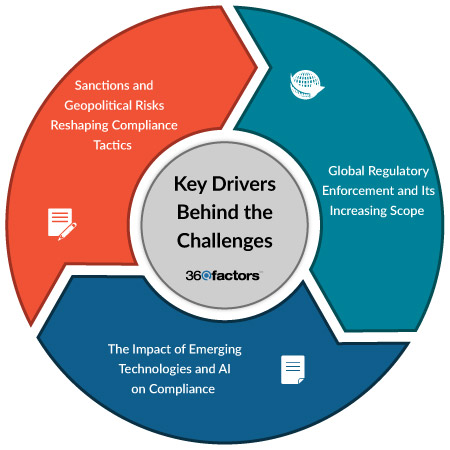
Core Components of an Effective CMS
Regulators typically look for several core components when evaluating the effectiveness of a financial institution’s CMS. According to regulatory guidance, an effective CMS is generally built on three interdependent pillars:
1. Board and Management Oversight
The board of directors and senior executives must demonstrate a commitment to compliance by establishing a clear compliance vision, allocating appropriate resources, and actively overseeing the program’s implementation.
Regulators will evaluate whether senior management has translated the board’s expectations into actionable policies, ensured staff training, and instituted processes to identify and remediate compliance issues promptly.
2. Compliance Program:
This component includes written policies and procedures that clearly outline how the institution will adhere to each applicable law or regulation. It also covers risk assessments to identify the areas of highest compliance risk and the controls put in place to mitigate those risks.
Employees at all levels should receive regular training on compliance policies and ethical expectations. A strong program will also establish processes for issue management: how the firm handles customer complaints, internal misconduct reports, or regulatory inquiries.
Regulators expect companies to have a structured way to track and resolve such issues as they can reveal compliance weaknesses. Compliance activities should be documented to provide evidence of the program’s operation.
3. Compliance Audit and Monitoring:
Regular independent reviews of the compliance program are essential to ensure it is working as intended. This can include internal audits, compliance testing, or external examinations that evaluate whether the organization is adhering to its internal policies and regulatory requirements.
A thorough audit report will document the scope of review, any violations or control gaps found, and management’s remediation plans with timelines. In the financial sector, ongoing monitoring of key compliance controls is also expected, so that issues are detected in real-time.
How to Measure Compliance Effectiveness
How do you know if your CMS is truly effective? To answer this, leading compliance teams track a set of Key Performance Indicators (KPIs) that provide insight into how well the compliance program is performing.
Below are some key compliance effectiveness metrics and why they matter:
| Policy Exception Rate | The frequency of exceptions or waivers granted to compliance policies and procedures. A high exception rate may signal weaknesses in policy design or a culture that resists standard controls. |
|---|---|
| Training Completion and Effectiveness | For example, the percentage of employees completing required compliance training on time. Near 100% completion or grading indicates a strong compliance culture and awareness across the workforce. |
| Incident Identification and Response | Mean Time to Discovery (MTTD) measures the average time to identify a control breach, and Mean Time to Resolution (MTTR) measures the time to remediate an issue. Shorter times reflect better monitoring systems and incident response processes. |
| Number of Open Compliance Issues | All unresolved compliance issues identified through audits, risk assessments, or regulatory exams. Persistent open findings suggest a lack of accountability, while a decreasing trend in open issues indicates the program is responsive and continuously improving. |
| Compliance Testing Results | A Control Effectiveness Score can be derived from internal audit ratings or self-assessments of key compliance controls. High effectiveness scores show that controls are adequately managing risks, whereas recurring control failures signal need for improvements. |
| Regulatory Examination Outcomes | This could be a qualitative measure (e.g., no major violations cited in the last exam, or an improved compliance rating from your regulator). Keeping this score high helps avoid surprises and demonstrates a state of continuous compliance. |
Tip: Where possible, automate the tracking and visualization of compliance KPIs. Modern GRC (Governance, Risk & Compliance) software can pull data from different systems and display these metrics on dashboards.
Automation reduces manual effort and ensures metrics are updated in real time, enabling the team to spot trends or red flags quickly. For instance, a dashboard could show the current number of open issues, training completion by department, and days since the last policy exception.
How to Strengthen Your Compliance Program
Strengthening a compliance management system requires a comprehensive approach:
- Build a solid CMS foundation
- Continuously measure and improve that program’s effectiveness
- Stay ahead of the curve on regulatory changes
Is your compliance program ready for 2026? Request a demo of our compliance solution, Predict360, and take the next step toward building a more effective, resilient compliance management system for your financial institution.

Request a Demo
Complete the form below and our business team will be in touch to schedule a product demo.
By clicking ‘SUBMIT’ you agree to our Privacy Policy.
Stay Informed About Upcoming Webinars & Events!