Home/ Blog / 7 Strategies for Insurance Compliance Management Process In 2026
The primary purpose of compliance management is to safeguard the integrity of operations, protect consumer interests, and maintain the trust of stakeholders. For insurance companies, the stakes are high. Regulatory requirements are dynamic and change frequently, demanding a proactive and strategic approach to compliance.
An effective compliance management process is the cornerstone of sustainable business practices for insurance firms. It offers a defense mechanism against potential pitfalls, including legal and financial penalties, operational disruptions, and reputational damage.
How to Approach the Compliance Management Process
Regulatory expectations highlight the need for insurance firms to continuously evaluate their compliance programs. These programs must be well-designed and effective in practice, demonstrating a commitment to ethical conduct and compliance.
We have detailed seven strategic approaches that can significantly elevate the effectiveness of compliance programs within insurance firms.
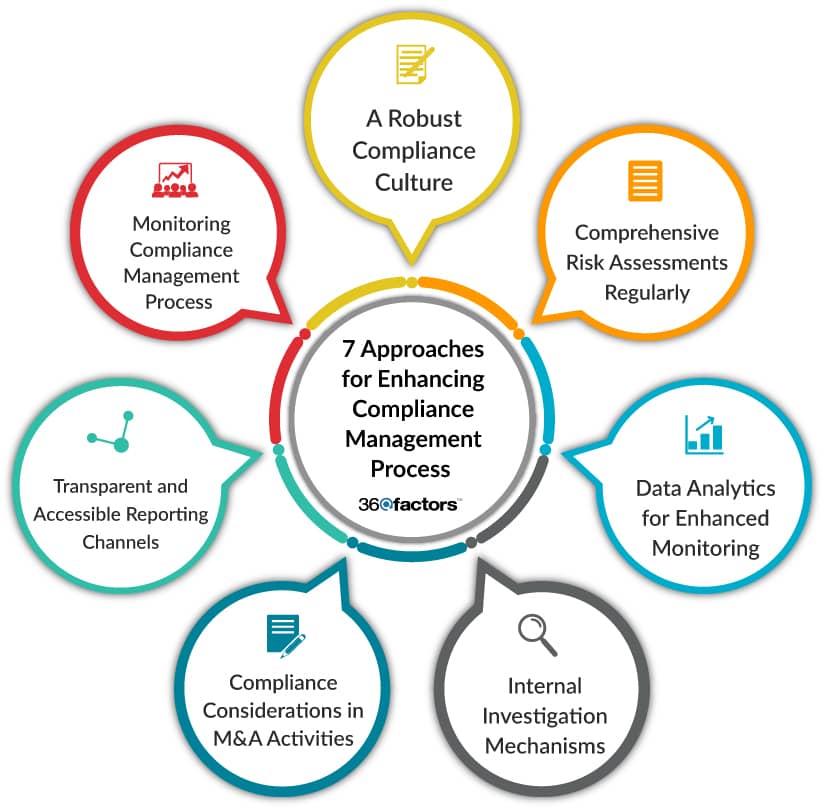
| Strategy | Key Focus & Actions |
|---|---|
| 1. Cultivate a Compliance Culture | Use continuous communication, training, and awareness programs to foster trust and commitment among employees. |
| 2. Conduct Regular Risk Assessments | Utilize generative AI and engage in various departments to gain a holistic view of the organization’s compliance posture. |
| 3. Leverage Data Analytics | Use data analytics to sift through vast volumes of information and regulatory updatesme. |
| 4. Refine Internal Investigations | Establish clear, detailed procedures for investigations and root cause analysis. Integrate remediation strategies to address underlying problems and prevent recurrence. |
| 5. Integrate Compliance in M&A | Incorporate compliance due diligence early in the Mergers and Acquisitions (M&A) process. |
| 6. Implement Reporting Channels | Create transparent, accessible mechanisms that allow stakeholders to report issues without fear of retaliation. |
| 7. Monitor and Update | Commit to the ongoing evaluation of compliance strategies to match the evolving regulatory landscape. |
1. Cultivate a Compliance Culture
Cultivating a compliance culture is foundational to the success of any organization’s compliance management process. Teams need to go beyond adherence to regulations and embed ethical behavior and compliance into the organization’s fabric. A compliance-aware culture creates an environment where employees are not only aware of the compliance management process requirements but also committed to upholding them. It is key to incorporate:
- Continuous communication
- Up-to-date training
- Awareness programs
A compliance culture fosters trust, enhances the organization’s reputation, and significantly reduces the risk of compliance breaches.
2. Conduct Risk Assessments Regularly
Regular compliance risk assessments can be carried out through generative AI in insurance. This technology plays a significant role in identifying and understanding an organization’s evolving risks. Regular compliance audits ensure that organizations remain proactive rather than reactive in their compliance efforts.
Here is a short checklist of key considerations when conducting a risk assessment:
- Define which business units and regulations
- Consider integrating AI and automated tools to identify risks faster
- Use forward-looking indicators rather than just historical loss data
- Treat risk assessment as an ongoing cycle, not a one-time event
Engaging various departments in the compliance management process of evaluation ensures a holistic view of the organization’s commitment to meeting regulatory requirements.
3. Leverage Data Analytics for Monitoring
In the data-driven world, leveraging data analytics for enhanced regulatory monitoring can be a game-changer for insurance businesses. Data analytics allow organizations to sift through vast volumes of information and regulatory updates in real time.
Some of the key benefits of leveraging data analytics include:
- Real-Time Detection
- Scalability & Efficiency
- Proactive Risk Management
- Real-Time Regulatory Data
4. Refine Internal Investigation Mechanisms
Enhancing internal investigation mechanisms is pivotal in effectively tackling non-compliance issuesating clear, detailed procedures for conducting internal investigations, organizations can ensure that instances of non-compliance are addressed on time.
It’s vital to integrate robust protocols for root cause analysis. This helps identify and mitigate underlying problems, which prevents the recurrence of compliance breaches. Integrating remediation strategies within the compliance management process is crucial to resolving compliance issues.
5. Integrate Compliance into M&A Activities
Integrating compliance considerations into Mergers and Acquisitions (M&A) activities is paramount for managing the associated risks. By incorporating compliance due diligence early in the M&A process, insurance companies can proactively identify and address potential regulatory and ethical challenges.
This early-stage due diligence facilitates a smoother transition of new business acquisitions, ensuring they align with the existing compliance frameworks. Strategic assessment and integration enable insurance organizations to adhere to relevant laws and enhance the compliance management process
Adopting this proactive compliance strategy not only averts legal and financial repercussions but also plays a significant role in preserving and enhancing the organization’s reputation.
6. Implement Transparent Reporting Channels
Transparent and accessible reporting channels, such as:
- Whistleblower mechanisms
- Online Reporting Portals
- Direct Access to Compliance Officers/Ombudsperson
- Anonymous Email Inboxes
- An Open Door Policy
Accessible reporting channels are a critical component of a transparent organizational culture that values integrity and accountability, contributing to the early detection and resolution of compliance issues.
7. Monitoring and Updating Compliance Management Process Continuously
The regulatory landscape and industry best practices are constantly evolving, making it essential for organizations to commit to the ongoing evaluation and refinement of their compliance management strategies. Continuously monitoring and updating compliance programs ensures they remain relevant and effective in addressing current and emerging risks.
Staying current with regulatory changes and industry developments allows organizations to adapt their compliance programs proactively. This commitment to continuous improvement demonstrates an organization’s dedication to upholding the highest compliance standards and ethical conduct.
Leveraging technology to streamline and enhance compliance management processes is essential in the dynamic realm of insurance compliance, which is characterized by constantly changing regulations and significant consequences for non-compliance.
Predict360 compliance management software enhances the compliance management process by centralizing all compliance-related informationdings, and documents on a single platform. This consolidation facilitates seamless communication and knowledge sharing across the organization, reinforcing compliance at every level.
Get in touch with our team to request a Predict360 demo.

Request a Demo
Complete the form below and our business team will be in touch to schedule a product demo.
By clicking ‘SUBMIT’ you agree to our Privacy Policy.
Stay Informed About Upcoming Webinars & Events!